Receive Your Free Roof Inspection Now
Professional Water Mitigation Services in Huntersville, NC, and the Charlotte–Fort Mill Metro
Water spreads faster than most property owners realize. A small leak behind a wall can saturate insulation, weaken materials, and impact flooring within hours. A burst pipe or appliance failure can send gallons of water into living spaces, and storm-related intrusions can damage ceilings, drywall, and structural components. We provide water mitigation services designed to stop the spread, remove moisture efficiently, and start the recovery process with clear steps and steady communication.
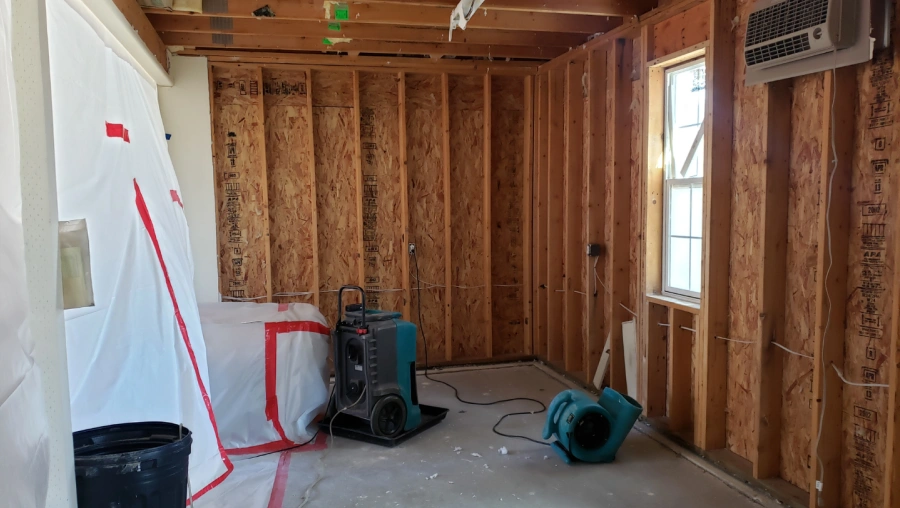
Our team responds quickly with pumps, extraction tools, dehumidifiers, air movers, moisture meters, and containment barriers. The goal is straightforward: remove the water, control the environment, prevent further damage, and prepare your home or building for repair or restoration. Whether it’s an overflowing bathroom, a slab leak, a storm intrusion, or a major burst line, we’re ready to take action.
Why Property Owners Trust Us for Water Mitigation
- Quick Arrival in Emergencies: We respond promptly across Huntersville, Charlotte, Fort Mill (SC), Waxhaw, Mooresville, and Cornelius with the equipment needed to begin water removal immediately.
- Focused on Limiting Damage: Water moves into walls, ceilings, floors, and mechanical spaces. We work quickly to stop the spread and preserve as much of the structure as possible.
- Moisture Detection Tools: Infrared cameras and moisture meters help us pinpoint saturation beyond what you can see on the surface.
- Organized, Safe Methods: We follow structured drying protocols to reduce the risk of mold, structural deterioration, and long-term moisture issues.
- Reliable Scheduling: Once conditions are under control, we guide the next steps with clarity and predictable timing.
Water Mitigation Services That Protect Your Property
- Water Extraction Service: Removing standing water from flooring, carpets, basements, crawlspaces, and living areas.
- Emergency Water Cleanup: Clearing debris, isolating affected rooms, and setting equipment to begin drying.
- Emergency Water Removal: Pumping out high volumes of water from flooding, burst pipes, appliance failures, or storm intrusions.
- Moisture Evacuation & Drying: Placing dehumidifiers, air movers, and heat-assisted drying equipment to remove moisture from structural materials.
- Flood Mitigation Services: Handling rising water, ground intrusion, or storm-driven flooding with protective and recovery steps.
- Cleaning & Disposal of Affected Materials: Removing unsalvageable drywall, insulation, flooring, or trim when necessary.
The Water Mitigation Process: From First Look to Full Drying
- Initial Containment: We isolate damaged areas to stop moisture migration into surrounding rooms.
- Extraction: Standing water is removed using pumps, vacuums, or high-powered extractors depending on the severity.
- Moisture Investigation: We inspect walls, ceilings, flooring, and structural cavities with meters and thermal tools.
- Drying Setup: Equipment is placed strategically to draw moisture out of wet materials.
- Monitoring: We track drying progress with readings and adjust equipment as needed.
- Planning the Next Phase: Once moisture levels return to acceptable ranges, we outline any repairs needed to restore the property fully.
What Can Water Damage If Not Addressed Quickly
- Flooring that warps, buckles, or separates
- Drywall that swells or softens
- Insulation that loses performance
- Subflooring that becomes unstable
- Trim and baseboards that absorb water
- Electrical systems exposed to moisture
- Cabinets or built-ins that develop swelling
- Ceilings that sag or discolor
- Structural components that weaken over time
Even small leaks create long-term problems when the moisture isn’t removed properly. Fast action prevents secondary repairs and keeps restoration costs lower.
Common Sources of Water Damage We Handle
- Burst or leaking pipes
- Appliance failures (washing machines, dishwashers, refrigerators)
- Water heater tank ruptures
- Storm-driven water intrusion
- Roof leaks that reach interior rooms
- Overflowing tubs, sinks, or toilets
- Clogged gutters causing backup into walls or ceilings
- Sewer backups (cleanup taken on a case-by-case basis)
- Crawlspace or basement flooding
If it involves water getting where it shouldn’t be, we can help.
What You Can Do Before We Arrive
- Shut off the main water supply if the leak is active
- Move valuables, electronics, and small items to a dry area
- If water is near outlets or appliances, avoid stepping into flooded areas
- Place towels where safe to slow spread on hard floors
- Avoid using household fans; professional equipment works differently and more effectively
- Keep pets and children out of affected rooms
We’ll guide you by phone if you’re unsure about any immediate steps.
Water Mitigation vs. Full Restoration
Water mitigation is the first phase: stopping the water, removing it, drying the structure, and preventing further issues. We offer emergency cleanup for major water damage.
Restoration is the follow-up phase: repairing and rebuilding materials that were damaged. We do interior repairs to full remodels; doors and windows are not included.
As a full-service water mitigation company, we handle both. Once the property is fully dried, we outline repair options such as:
- Drywall replacement
- Trim and paint
- Flooring repairs
- Cabinet restoration or replacement
- Insulation replacement
- Ceiling repairs
This gives you one team from the moment the water problem starts to the point where everything is restored.
Service Area
We’re based in Huntersville, NC, and offer water mitigation services across the Charlotte–Fort Mill, SC metropolitan area, including Charlotte, Fort Mill (SC), Waxhaw, Mooresville, and Cornelius. Weekly projects extend within a two-and-a-half-hour radius, and for large emergency events, we mobilize throughout the Southeast.
Enter To Win A $1,000 Visa Card
Book and complete a free roof inspection with our team and get an automatic raffle entry.
Frequently Asked Questions About Water Mitigation
-
Immediately. Water can reach structural materials within hours. Quick action reduces long-term repair needs.
-
Yes. We remove high volumes of water from storms, burst lines, and ground intrusion.
-
Most drying cycles take 2–5 days, depending on moisture levels, material types, and the size of the affected area.
-
It depends on the saturation level. Some materials can dry in place; others require safe removal and replacement.
-
Yes. If your situation is claim-appropriate, our documentation helps inform the process.
-
No problem. We offer transparent pricing, options, and clear next steps. You can easily discuss your damage issues with us.